(Stein Atle Vere. ©2012. But Chosen for What? brakha.blogspot.com.)
Jews are “chosen”. But chosen for what?
God chooses Jews to do Tora. Tora. Thats it. Tora. Nothing more, and nothing less.
Most Nonjews dont want to do Tora. So there is no reason to resent this choice by God. Of course, if there are Nonjews who want to do Tora, they can convert to Judaism.
Nonjews dont need to do Tora. But Jews do.
God chooses Jews to do Tora.
Notice Yhoshua (Historical Jesus) also desires Jews to do Tora. Yhoshua commands his own Jewish students: “The Sofrim (scribes) and the Prushim (Pharisees) sit in the [Judgment] Seat of Moshe (Moses). Therefore do whatever they say.” (Matt 23'2-3.)
With regard to the commandments by God that are in the first five books of the Bible - the Tora of Moshe - the Prushim and Sofrim are the ones who inherit the authority (“the judgment seat”) to define how Jews must do these commandments.
The Prushim are the successors of the ancient “seventy elders” who share the spirit that God gave to Moshe. (Numbers 11'16-17,24-25.) Here Yhoshua corroborates the Rabanim (Rabbis) who trace the transmission of this authority from Moshe to Yhoshua Ben Nun to the seventy elders, and so on all the way to Hilel, who is one of the Prushim. (Mishna, Pirke Avot 1'1-.)
Jews must do Tora in whatever way the Prushim and their successors define it.
Moreover Yhoshua instructs his own students, it isnt enough to just do the commandments of the Tora. They must do them with the proper intention: do the commandment with love, compassion, mercy, and forgiveness.
Jewish spirituality considers proper intention to be a vital requirement to fulfill a commandment by God.
Yhoshua wants Jews to do Tora.
Of course, Nonjews dont need to do these commandments in Tora. But Yhoshua believes Jews do them.
Showing posts with label yhoshua. Show all posts
Showing posts with label yhoshua. Show all posts
2012-03-28
2011-07-01
Stones of Heavens - Midrash and Yhoshua
(Vere, Stein Atle. ©2011. “Stones of Heavens: Midrash and Yhoshua”. brakha.blogspot.com.)
Due to time constraints this is an unfinished roughdraft to finish soon.
Remarkably, the list of the twelve gems in Midrash Raba by the Rabanim (Rabbis), in the book of Shmot Raba, seems identical to the list in the New Testament by the students of Yhoshua (Historical Jesus), in the book of Khazon Yhokhanan (Revelation of John).
The twelve different types of gems decorate the Khoshen חשן amulet that Kohen Ha'Mashiakh כהן המשיח (anointed priest) wears to enter the holiest area of the presence of God. Each is the official gem of one of the twelve tribes of Yisrael (Israel).
The list of the gem types that survives in Greek in the New Testament, in the book of Khazon Yhokhanan 21'19-20, is unusual. It differs from the Greek list in the Targum Hashivim (Septuagint Greek Bible), by updating the Greek gem names to Huakinthos υακινθος, Khalkėdȯn χαλκηδων, and so on. This list in Khazon represents the gem names that Yhoshua יהושע (Historical Jesus) and his students know during the Classical Age circa 00s.
About a thousand years later, during the Medieval Age circa 1000s, a similar list survives in Hebrew in Midrash Raba, in the book of Shmot Raba 38'10. The list is Hebrew, but its gem names derive clearly derive from Greek loanwords, such as Daykintin דייקינתין being a variant of Hebrew *Hyakintin הְיַקִינְתִּין from Greek Hyakinthos, and Bardinin ברדינין probably being a scribal copying variant of *Kardonin כַּרְדּוֹנִין , a contraction of *Karkdonin כַּרְכְדּוֹנִין from Greek Kalkhėdȯn. (For Hebrew Karkdonim compare the Latin variant Carcedonius in the Vulgate Latin Bible circa 300s to refer to the same gem name.)
Note: The copying variants in this list in Shmot Raba evidence, the Rabanim do not quote these gem names directly from a Greek source, but rather preserve their own list of gem names in Hebrew, that the scribes recopy a number of times, thus transmitting the names since ancient times. It is an independent Rabani tradition.
The medieval Rabanim and the ancient students of Yhoshua share this same Tora tradition to identify the twelve tribal gems.
Regarding the Rabanim, the list in the book of Khazon by the students of Yhoshua demonstrates the antiquity of the Tora tradition - already existing about a thousand years earlier.
Regarding the students of Yhoshua, this list in the book of Shmot Raba by the Rabanim demonstrates the Yahadut (“Jewishness”) of the Tora tradition that Yhoshua upholds.
The gem list in Shmot Raba that the medieval Rabanim copy is already ancient.
The Rabanim seem to preserve this list, generation after generation, for almost a thousand years. The list is in Hebrew, but most of these Hebrew gem names - probably all of these Hebrew gem names - derive from the Greek gem names. As such, the Hebrew names function as technical terms (somewhat analogous to modern scientific nomenclature) to specify the merchandise of the international gem trade across the Roman Empire.
This Hebrew list originates during the Classical Age, probably as early as circa 00s (first century CE). It uses the same gemological nomenclature as do the book of Khazon, the books by Titus Iosephus Flavia (Flavia Josephus), and as the encyclopedic books of Naturalis Historia (Natural History) by Gaius Plinius Secundus (Pliny the Elder). All of these writers flourish during the 00s, and the Hebrew list preserves this same terminology.
During the Classical Age circa 00s, the Temple of God stands in Yrushalayim ירושלים (Jerusalem), the capital city of Yhuda יהודה (Judea). Pilgrimage there from the across the known world brings enormous wealth to the city. Gold, silver, and the costliest gems adorn the aboriginal sacred traditions of Yisrael. Since the days of the Hashmonim (Hasmoneans), the Kohanim (priests) are the sovereign leaders of the Yhudim יהודים (Judeans), especially after the secular kings and governors are representatives of Rome. Moreover, Yrushalayim includes a significant minority of Greek-speaking “Hellenist” Yhudim. Note: The Greek gem names that actually derive from Hebrew - such as Greek Sapphiros from Hebrew Sapir ספיר and Greek To-pazd-ion from Hebrew Pitda פטדה - evidence the Yhudim to enjoy a significantly presence in the international gem trade since ancient times. The land of Yisrael is part of the links between Rome and Bavli בבלי (Babylon), and via the Red Sea even part of the links between Rome and India. Apparently, there are Hebrew-speakers during the 00s who know the Greek gem names because of their participation in the international trade for gems.
These ancient Yhudi lapidaries - gem dealers - are probably the authorship that ultimately produces the list of gem names that the Rabanim mention in Shmot Raba.
The Hebrew gem list is an independent tradition. It doesnt simply copy an ancient text, such as that of Khazon, Iosephus, or Plinius.
If the Hebrew list already exists during the 00s, then the book of Khazon Yhokhanan probably knows it, so that its gem names in Greek actually refers to the Hebrew international gem nomenclature as it pertains to the gems that the Kohen Ha'Mashiakh wears in the sacred Khoshen amulet.
The Hebrew list of these gem names seems to already exist by the 300s. At that time, Hieronymus (Saint Jerome) seems to refer to it for his Vulgate Latin translation of the Hebrew Bible. He lives in the land of Yisrael, in the coastal city of Caesarea. He frequently consults with the Rabanim there to explain obscure Hebrew words. It seems his original spelling in Latin, Carcedonius, with an -r- to represent the Greek gem name Khalkedon with an -l-, seems to derive directly from the Hebrew gem name *Karkdonin כַּרְכְּדוֹנִין.
Note: This particular gem, Karkdonin, derives from the name of the ancient city of “Carthage” in today Tunisia, and not from the ancient city of “Kalkedon” in today Turkey. Notably, both of these names come from the same Canaanite Kart-Khadsha קרת חדשה meaning “New Town” and referring to a colony of the seafaring Knaanim (Canaanites) of today Lebanon. It makes sense the gem corresponds to Carthage, since the same gems of that city also tend to exist in Mitsrayim (Egypt). The tribes of Yisrael get these twelve gems during the Bronze Age, from Mitsrayim.
During the Classical Age circa 00s, Plinius describes the gem of Carthage as a dark gem that gleams a fiery orange-red light when held up to the sun. Evidently, this is the same gem that today calls the garnet - a dark variety of it - and is identical to the same gem that Targum Hashivim (Septuagint Greek Bible) calls Anthraks, meaning an ember of burning “coal” in Greek. Moreover, this is identical to the Latin loan translation Carbunculus, which also means “coal”, and that Hieronymus uses elsewhere as the name for this same garnet gem.
Indeed the Mitsriyim (Egyptians) use garnets in their amulets during the Bronze Age.
In sum, the garnet stone in the Khoshen, that comes from the gems of Mitsrayim during the Bronze Age, appears during the Classical Age in Greek in Targum Hashivim as the name Anthraks, but appears in Greek in the New Testament as Khalkedon. Notably, this gem name apparently refers to the name of the city, Carthage, in today Tunisia that is famous for garnet, rather than to the city in Turkey that shares a related name. In the 300s, this garnet appears in Latin in the Vulgate Bible as Carbunculus that translates Greek Anthraks exactly and as Carcedonius that refers to Carthage. This Latin name Carcedonius appears to correspond to the Hebrew technical name for this garnet, Karkdonin, thus corroborates the existence circa 300s of the gem list that the later medieval Rabanim refer to in Shmot Raba.
In the Hebrew gem list, the twelve gem names are part of the living Hebrew language and evidence natural linguistic shifts. Its existence within a living Hebrew language also points to the early date.
Example: The name for the purple quartz - also known as amethyst - exemplifies the linguistic shifts that most of the gem names undergo in the Rabani Hebrew list.
Ultimately, the Greek name Amethustos αμεθυστος evolves into the Hebrew name *Hemesiyin הֵימֵיסִּיִין .
When Hebrew first borrows the Greek name Amethustos, the Hebrew lacks certain Greek sounds. The distinctive Greek -u- (rounded high front) vowel sometimes approximates as the Hebrew -u- (rounded high back) vowel or else the Hebrew -i- (unrounded high front) vowel, depending on the context of nearby sounds. Here, the -u- in Greek Amethustos approximates to the -i- in Hebrew Amethistos. But then Hebrew adds the suffix -in ין . This is the classical Greek diminutive suffix -ion -ιον , but signifies precisely the later pronunciation per the international Koine Greek as -in. (Klein. “ין”. Etymological Dictionary of the Hebrew Language.) Thus the original Hebrew gem name deriving from Greek circa 00s, and serving as the professional nomenclature for the purple quartz in the gem trade, reconstructs as something like: *Ametistin אֲמֶתִּיסְטִין in Hebrew.
However this original approximation is unstable, and shifts.
The syllable stress from the -e- in Greek Amethustos to the final syllable -in in Hebrew *Ametistin causes a rapid succession of sounds.
Hebrew finds it awkward to pronounce two nearby -t- sounds in Greek loanwords and often reduces them to one. Thus in the context of resolving the shortened syllables, *Ametistin swaps the sounds of the consonant -t- and vowel -i- (metathesizing), tentatively *Ameitsĕtin אֲמֶיִתְּסְטִין with the vowels merging to a monosyllabic *Ametsĕtin אֲמֵיתְּסְטִין , and finally the aspirated -t- sound assimilating into the oncoming nearby -t- sound: *Amesĕtin אֲמֵיסְּטִין . To prevent contracting the initial ultrashort vowel into nothing, the initial syllable expands into a long vowel while assimilating into the oncoming -e- vowel: *Emesĕtin אֵמֵיסְּטִין . While expanding, the initial vowel also aspirates. Hebrew often does this for Greek loanwords. (Compare Greek Sunedros that becomes Hebrew Sanhedrin, when the addition of the Greek diminutive suffix -ion, actually -in, mark a Greek loanword, but shifts the stress of vowels, while the distinctive Greek -u- approximates into Hebrew as unstressed -i-, likely -ĕ-, whence -a-, and while -e- aspirates into -he-.) So far: *Hemesĕtin הֵמֵיסְּטִין . Probably later, this -t- weakens, assimilating (palletizing) among the -s-, ultrashort -ĕ-, and oncoming -i-, thus forming a -y-: *Hemesyin הֵימֵיסְּיִין .
The result: The Greek loanword Amethustos enters Hebrew as *Ametistin אֲמֶתִּיסְטִין but morphs into *Hemesyin הֵימֵיסְּיִין as part of the rhythm of the living Hebrew language.
The surviving form of the gem name in texts is, Hemesyon הֵימֵיסְּיוֹן . Probably, the -o- is a copying variant by scribe who is unfamiliar with the obscure Hebrew technical term and who visually reinterprets an ambiguous form of -י- as -ו- , thus an -o- instead of the original -i-. The accumulation of scribal variants evidences the passage of time. This list that the Rabanim cite appears many centuries old.
The gem list of the Shmot Raba evidences spoken Hebrew. Hebrew-speakers adapt these Greek technical terms as part of the rhythm of the everyday Hebrew language. Hebrew ceases to be a language of common speech circa 300, in the aftermath of the genocide of the Yhudim in Yhuda (Judea) that culminates the Bar Kokhba War circa 135. Thus the names probably derive before 300.
The Hebrew names in this list already exist during the 300s. One of the gem names survives as ברדינין , at first glance this looks something like Bardinim, a meaningless word. Most scholars agree this name must somehow be a scribal “garble” of the Hebrew gem name Kadkod כַּדְכֹּד . I agree, but the variant isnt as drastic as it seems. It seems obvious to me, the Hebrew letters ברדינין are a scribal variant of כרדונין . Rereading these letters this way is common in Hebrew even with the best handwriting. Thus the Hebrew Gem name is actually Kardonim כַּרְדּוֹנִין
Due to time constraints this is an unfinished roughdraft to finish soon.
Remarkably, the list of the twelve gems in Midrash Raba by the Rabanim (Rabbis), in the book of Shmot Raba, seems identical to the list in the New Testament by the students of Yhoshua (Historical Jesus), in the book of Khazon Yhokhanan (Revelation of John).
The twelve different types of gems decorate the Khoshen חשן amulet that Kohen Ha'Mashiakh כהן המשיח (anointed priest) wears to enter the holiest area of the presence of God. Each is the official gem of one of the twelve tribes of Yisrael (Israel).
The list of the gem types that survives in Greek in the New Testament, in the book of Khazon Yhokhanan 21'19-20, is unusual. It differs from the Greek list in the Targum Hashivim (Septuagint Greek Bible), by updating the Greek gem names to Huakinthos υακινθος, Khalkėdȯn χαλκηδων, and so on. This list in Khazon represents the gem names that Yhoshua יהושע (Historical Jesus) and his students know during the Classical Age circa 00s.
About a thousand years later, during the Medieval Age circa 1000s, a similar list survives in Hebrew in Midrash Raba, in the book of Shmot Raba 38'10. The list is Hebrew, but its gem names derive clearly derive from Greek loanwords, such as Daykintin דייקינתין being a variant of Hebrew *Hyakintin הְיַקִינְתִּין from Greek Hyakinthos, and Bardinin ברדינין probably being a scribal copying variant of *Kardonin כַּרְדּוֹנִין , a contraction of *Karkdonin כַּרְכְדּוֹנִין from Greek Kalkhėdȯn. (For Hebrew Karkdonim compare the Latin variant Carcedonius in the Vulgate Latin Bible circa 300s to refer to the same gem name.)
Note: The copying variants in this list in Shmot Raba evidence, the Rabanim do not quote these gem names directly from a Greek source, but rather preserve their own list of gem names in Hebrew, that the scribes recopy a number of times, thus transmitting the names since ancient times. It is an independent Rabani tradition.
The medieval Rabanim and the ancient students of Yhoshua share this same Tora tradition to identify the twelve tribal gems.
Regarding the Rabanim, the list in the book of Khazon by the students of Yhoshua demonstrates the antiquity of the Tora tradition - already existing about a thousand years earlier.
Regarding the students of Yhoshua, this list in the book of Shmot Raba by the Rabanim demonstrates the Yahadut (“Jewishness”) of the Tora tradition that Yhoshua upholds.
The gem list in Shmot Raba that the medieval Rabanim copy is already ancient.
The Rabanim seem to preserve this list, generation after generation, for almost a thousand years. The list is in Hebrew, but most of these Hebrew gem names - probably all of these Hebrew gem names - derive from the Greek gem names. As such, the Hebrew names function as technical terms (somewhat analogous to modern scientific nomenclature) to specify the merchandise of the international gem trade across the Roman Empire.
This Hebrew list originates during the Classical Age, probably as early as circa 00s (first century CE). It uses the same gemological nomenclature as do the book of Khazon, the books by Titus Iosephus Flavia (Flavia Josephus), and as the encyclopedic books of Naturalis Historia (Natural History) by Gaius Plinius Secundus (Pliny the Elder). All of these writers flourish during the 00s, and the Hebrew list preserves this same terminology.
During the Classical Age circa 00s, the Temple of God stands in Yrushalayim ירושלים (Jerusalem), the capital city of Yhuda יהודה (Judea). Pilgrimage there from the across the known world brings enormous wealth to the city. Gold, silver, and the costliest gems adorn the aboriginal sacred traditions of Yisrael. Since the days of the Hashmonim (Hasmoneans), the Kohanim (priests) are the sovereign leaders of the Yhudim יהודים (Judeans), especially after the secular kings and governors are representatives of Rome. Moreover, Yrushalayim includes a significant minority of Greek-speaking “Hellenist” Yhudim. Note: The Greek gem names that actually derive from Hebrew - such as Greek Sapphiros from Hebrew Sapir ספיר and Greek To-pazd-ion from Hebrew Pitda פטדה - evidence the Yhudim to enjoy a significantly presence in the international gem trade since ancient times. The land of Yisrael is part of the links between Rome and Bavli בבלי (Babylon), and via the Red Sea even part of the links between Rome and India. Apparently, there are Hebrew-speakers during the 00s who know the Greek gem names because of their participation in the international trade for gems.
These ancient Yhudi lapidaries - gem dealers - are probably the authorship that ultimately produces the list of gem names that the Rabanim mention in Shmot Raba.
The Hebrew gem list is an independent tradition. It doesnt simply copy an ancient text, such as that of Khazon, Iosephus, or Plinius.
If the Hebrew list already exists during the 00s, then the book of Khazon Yhokhanan probably knows it, so that its gem names in Greek actually refers to the Hebrew international gem nomenclature as it pertains to the gems that the Kohen Ha'Mashiakh wears in the sacred Khoshen amulet.
The Hebrew list of these gem names seems to already exist by the 300s. At that time, Hieronymus (Saint Jerome) seems to refer to it for his Vulgate Latin translation of the Hebrew Bible. He lives in the land of Yisrael, in the coastal city of Caesarea. He frequently consults with the Rabanim there to explain obscure Hebrew words. It seems his original spelling in Latin, Carcedonius, with an -r- to represent the Greek gem name Khalkedon with an -l-, seems to derive directly from the Hebrew gem name *Karkdonin כַּרְכְּדוֹנִין.
Note: This particular gem, Karkdonin, derives from the name of the ancient city of “Carthage” in today Tunisia, and not from the ancient city of “Kalkedon” in today Turkey. Notably, both of these names come from the same Canaanite Kart-Khadsha קרת חדשה meaning “New Town” and referring to a colony of the seafaring Knaanim (Canaanites) of today Lebanon. It makes sense the gem corresponds to Carthage, since the same gems of that city also tend to exist in Mitsrayim (Egypt). The tribes of Yisrael get these twelve gems during the Bronze Age, from Mitsrayim.
During the Classical Age circa 00s, Plinius describes the gem of Carthage as a dark gem that gleams a fiery orange-red light when held up to the sun. Evidently, this is the same gem that today calls the garnet - a dark variety of it - and is identical to the same gem that Targum Hashivim (Septuagint Greek Bible) calls Anthraks, meaning an ember of burning “coal” in Greek. Moreover, this is identical to the Latin loan translation Carbunculus, which also means “coal”, and that Hieronymus uses elsewhere as the name for this same garnet gem.
Indeed the Mitsriyim (Egyptians) use garnets in their amulets during the Bronze Age.
In sum, the garnet stone in the Khoshen, that comes from the gems of Mitsrayim during the Bronze Age, appears during the Classical Age in Greek in Targum Hashivim as the name Anthraks, but appears in Greek in the New Testament as Khalkedon. Notably, this gem name apparently refers to the name of the city, Carthage, in today Tunisia that is famous for garnet, rather than to the city in Turkey that shares a related name. In the 300s, this garnet appears in Latin in the Vulgate Bible as Carbunculus that translates Greek Anthraks exactly and as Carcedonius that refers to Carthage. This Latin name Carcedonius appears to correspond to the Hebrew technical name for this garnet, Karkdonin, thus corroborates the existence circa 300s of the gem list that the later medieval Rabanim refer to in Shmot Raba.
In the Hebrew gem list, the twelve gem names are part of the living Hebrew language and evidence natural linguistic shifts. Its existence within a living Hebrew language also points to the early date.
Example: The name for the purple quartz - also known as amethyst - exemplifies the linguistic shifts that most of the gem names undergo in the Rabani Hebrew list.
Ultimately, the Greek name Amethustos αμεθυστος evolves into the Hebrew name *Hemesiyin הֵימֵיסִּיִין .
When Hebrew first borrows the Greek name Amethustos, the Hebrew lacks certain Greek sounds. The distinctive Greek -u- (rounded high front) vowel sometimes approximates as the Hebrew -u- (rounded high back) vowel or else the Hebrew -i- (unrounded high front) vowel, depending on the context of nearby sounds. Here, the -u- in Greek Amethustos approximates to the -i- in Hebrew Amethistos. But then Hebrew adds the suffix -in ין . This is the classical Greek diminutive suffix -ion -ιον , but signifies precisely the later pronunciation per the international Koine Greek as -in. (Klein. “ין”. Etymological Dictionary of the Hebrew Language.) Thus the original Hebrew gem name deriving from Greek circa 00s, and serving as the professional nomenclature for the purple quartz in the gem trade, reconstructs as something like: *Ametistin אֲמֶתִּיסְטִין in Hebrew.
However this original approximation is unstable, and shifts.
The syllable stress from the -e- in Greek Amethustos to the final syllable -in in Hebrew *Ametistin causes a rapid succession of sounds.
Hebrew finds it awkward to pronounce two nearby -t- sounds in Greek loanwords and often reduces them to one. Thus in the context of resolving the shortened syllables, *Ametistin swaps the sounds of the consonant -t- and vowel -i- (metathesizing), tentatively *Ameitsĕtin אֲמֶיִתְּסְטִין with the vowels merging to a monosyllabic *Ametsĕtin אֲמֵיתְּסְטִין , and finally the aspirated -t- sound assimilating into the oncoming nearby -t- sound: *Amesĕtin אֲמֵיסְּטִין . To prevent contracting the initial ultrashort vowel into nothing, the initial syllable expands into a long vowel while assimilating into the oncoming -e- vowel: *Emesĕtin אֵמֵיסְּטִין . While expanding, the initial vowel also aspirates. Hebrew often does this for Greek loanwords. (Compare Greek Sunedros that becomes Hebrew Sanhedrin, when the addition of the Greek diminutive suffix -ion, actually -in, mark a Greek loanword, but shifts the stress of vowels, while the distinctive Greek -u- approximates into Hebrew as unstressed -i-, likely -ĕ-, whence -a-, and while -e- aspirates into -he-.) So far: *Hemesĕtin הֵמֵיסְּטִין . Probably later, this -t- weakens, assimilating (palletizing) among the -s-, ultrashort -ĕ-, and oncoming -i-, thus forming a -y-: *Hemesyin הֵימֵיסְּיִין .
The result: The Greek loanword Amethustos enters Hebrew as *Ametistin אֲמֶתִּיסְטִין but morphs into *Hemesyin הֵימֵיסְּיִין as part of the rhythm of the living Hebrew language.
The surviving form of the gem name in texts is, Hemesyon הֵימֵיסְּיוֹן . Probably, the -o- is a copying variant by scribe who is unfamiliar with the obscure Hebrew technical term and who visually reinterprets an ambiguous form of -י- as -ו- , thus an -o- instead of the original -i-. The accumulation of scribal variants evidences the passage of time. This list that the Rabanim cite appears many centuries old.
The gem list of the Shmot Raba evidences spoken Hebrew. Hebrew-speakers adapt these Greek technical terms as part of the rhythm of the everyday Hebrew language. Hebrew ceases to be a language of common speech circa 300, in the aftermath of the genocide of the Yhudim in Yhuda (Judea) that culminates the Bar Kokhba War circa 135. Thus the names probably derive before 300.
The Hebrew names in this list already exist during the 300s. One of the gem names survives as ברדינין , at first glance this looks something like Bardinim, a meaningless word. Most scholars agree this name must somehow be a scribal “garble” of the Hebrew gem name Kadkod כַּדְכֹּד . I agree, but the variant isnt as drastic as it seems. It seems obvious to me, the Hebrew letters ברדינין are a scribal variant of כרדונין . Rereading these letters this way is common in Hebrew even with the best handwriting. Thus the Hebrew Gem name is actually Kardonim כַּרְדּוֹנִין
GREEK | LATIN | HEBREW | |||
Iosephus (Jewish Antiquities) | Khazon Yhokhanon 21'19-20 (Revelation of John) | Vulgate Bible / Plinius | Reconstruct of original classical Hebrew gem names | Extent of later medieval Hebrew gem names Shmot Raba 38'10 | |
σαρδόνυξ | σαρδόνυξ | Sardonix | *Sardonukin | שַׂרְדֹנֻכִּין | שדרגנין |
τόπαζος | τοπάζιον | Topazius | *Topazin | טוֹפַזִין | שימפוזין |
λιγύριον | ὑάκινθος | Hyacintus | *Hyakinthin | הְיַקִינְתִּין | דייקינתין |
ἄνθραξ | χαλκηδών | Carcedonius | *Karkdonin | כַּרְכְּדוֹנִין | ברדינין |
σάπφειρος | σάπφιρος | Sapphyrus | *Sapirin | סַפִּירִין | סנפרינון |
σμάραγδος | σμάραγδος | Zmaragdus | *Smaragdin | סְמַרַגְדִּין | אסמרגדין |
βήρυλλος | βήρυλλος | Berillus | *Berulin | בֵּירוּלִּין | כוחלין |
ἀχάτης | σάρδιον | Sardinus / Achates | *Akhates | אֲכַאטֵיס | אבאטיס |
ἀμέθυσος | ἀμέθυστος | Amethistus | *Amethistin | אֲמֶתִּיסְטִּין | הימיסיון |
ὄνυξ | χρυσόπρασος | Chrysoprassus | *Krusoprasin | קְרוּסֹפְרַסִין | קרומטסין |
ἴασπις | ἴασπις | Iaspis / Perileucos | *Perileukin | פֵּרִילֶוְקִין | פראלוקין |
χρυσόλιθος | χρυσόλιθος | Chrysolithus | *Krusolitos | כְּרוּסוֹלִיטוֹס | מרגליטוס |


2011-06-22
Yhoshua, Yhudim and Notsrim
(Vere, Stein Atle. ©2011. “Comment: Yhoshua, Yhudim and Notsrim”. brakha.blogspot.com.)
Jewish Ideas Daily publishes a book review about the “Jesus question”. Namely, how to understand the ancient Yhoshua (Historical Jesus) within the context of the Tora (Judaism).
![]()
Eve Levavi Feinstein reviews the following book about Yhoshua, his place within Tora, and by extension the implications for the modern friendship between Yhudim (Jews) and Notsrim (Christians).
• The Jewish Jesus: Revelation, Reflection, Reclamation. Edited by Garber, Zev. ©2011.
![]()
The Jewish Jesus is a collection of essays whose topics range from the ancient Yhoshua doing the Tora to modern Yhudi scholars reclaiming him as a Yhudi spiritual figure.
The review concludes cautiously:
“It may certainly be argued that beliefs such as these are not beyond the pale of traditional rabbinic Judaism.
Yet it is difficult to imagine that they will be widely accepted within the Jewish community any time soon, making them a questionable basis for genuine inter-communal dialogue.
Moreover, as none of the Jewish thinkers cited in these essays accepts the core Christian doctrines of the resurrection and full divinity of Jesus, the gulf between mainstream Jewish and Christian views of Jesus remains quite wide.
For Jews, learning to understand and respect Christian views about Jesus - without necessarily accepting them - may be more fruitful than attempting to claim him as one of our own.”
In sum, Yhoshua seems true to Tora. There are ways to understand him within Tora. At the same time, the Tora is unable to entertain the “full divinity” of Yhoshua - namely, unable to worship a human as if a human is God.
Even so, it seems to me, Notsrim have enough ideological room to bridge the gulf.
Thus the modern reclamation of Yhoshua as a Yhudi is valuable because it clarifies how Notsrim connect to the Tora.
Rather than Yhudim needing to embrace the theology of Notsrim, Notsrim can bridge the difference, by understanding the teachings of Yhoshua within the context of the Tora.
Yhoshua, like any human, is to be “one” with God. Even so, God isnt a human. God is utterly beyond any human, including beyond the human Yhoshua.
And so on within the context of the Tora - especially within the concepts of Kabala (Jewish spirituality) - it is possible for Notsrim to reexplain the theology to clarify its monotheism.
I believe it is possible, for Yhudim and Notsrim to form a spiritual alliance.
More than a friendship among those who agree to disagree, it seems to me possible to arrive at a mutual understanding.
The bridge between Yhudim and Notsrim has something to do with the following:
• See Yhoshua as one among many Yhudim,
• See the ongoing Tora among all Yhudim as the spiritual authority,
• See the spiritual necessity of both Yhudim and Non-Yhudim,
• See why Yhudim need to do Tora, and why Non-Yhudim dont need to do Tora.
• See Non-Yhudi students of Yhoshua as God-fearers, a kind of Gerim, thus part of the spiritual community of Yisrael.
See Also:
• Jewish Ideas Daily. ©2011. jewishideasdaily.com, 2011.
• Feinstein, Eve Levavi. ©2011. “Jesus for Jews”. jewishideasdaily.com.
www.jewishideasdaily.com/content/module/2011/6/15/main-feature/1/jesus-for-jews, 2011.
• The Jewish Jesus: Revelation, Reflection, and Reclamation. Edited by Galber, Zev. ©2011. Purdue University Press.
www.thepress.purdue.edu/titles/format/9781557535795, 2011.
Jewish Ideas Daily publishes a book review about the “Jesus question”. Namely, how to understand the ancient Yhoshua (Historical Jesus) within the context of the Tora (Judaism).

(Chagall, Marc. ©1943. “Yellow Crucifixion”. Online: Jewish Ideas Daily.
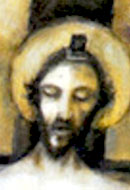
Eve Levavi Feinstein reviews the following book about Yhoshua, his place within Tora, and by extension the implications for the modern friendship between Yhudim (Jews) and Notsrim (Christians).
• The Jewish Jesus: Revelation, Reflection, Reclamation. Edited by Garber, Zev. ©2011.

(The Jewish Jesus. Online: www.thepress.purdue.edu.
www.thepress.purdue.edu/titles/format/9781557535795, 2011.)
www.thepress.purdue.edu/titles/format/9781557535795, 2011.)
The Jewish Jesus is a collection of essays whose topics range from the ancient Yhoshua doing the Tora to modern Yhudi scholars reclaiming him as a Yhudi spiritual figure.
The review concludes cautiously:
“It may certainly be argued that beliefs such as these are not beyond the pale of traditional rabbinic Judaism.
Yet it is difficult to imagine that they will be widely accepted within the Jewish community any time soon, making them a questionable basis for genuine inter-communal dialogue.
Moreover, as none of the Jewish thinkers cited in these essays accepts the core Christian doctrines of the resurrection and full divinity of Jesus, the gulf between mainstream Jewish and Christian views of Jesus remains quite wide.
For Jews, learning to understand and respect Christian views about Jesus - without necessarily accepting them - may be more fruitful than attempting to claim him as one of our own.”
In sum, Yhoshua seems true to Tora. There are ways to understand him within Tora. At the same time, the Tora is unable to entertain the “full divinity” of Yhoshua - namely, unable to worship a human as if a human is God.
Even so, it seems to me, Notsrim have enough ideological room to bridge the gulf.
Thus the modern reclamation of Yhoshua as a Yhudi is valuable because it clarifies how Notsrim connect to the Tora.
Rather than Yhudim needing to embrace the theology of Notsrim, Notsrim can bridge the difference, by understanding the teachings of Yhoshua within the context of the Tora.
Yhoshua, like any human, is to be “one” with God. Even so, God isnt a human. God is utterly beyond any human, including beyond the human Yhoshua.
And so on within the context of the Tora - especially within the concepts of Kabala (Jewish spirituality) - it is possible for Notsrim to reexplain the theology to clarify its monotheism.
I believe it is possible, for Yhudim and Notsrim to form a spiritual alliance.
More than a friendship among those who agree to disagree, it seems to me possible to arrive at a mutual understanding.
The bridge between Yhudim and Notsrim has something to do with the following:
• See Yhoshua as one among many Yhudim,
• See the ongoing Tora among all Yhudim as the spiritual authority,
• See the spiritual necessity of both Yhudim and Non-Yhudim,
• See why Yhudim need to do Tora, and why Non-Yhudim dont need to do Tora.
• See Non-Yhudi students of Yhoshua as God-fearers, a kind of Gerim, thus part of the spiritual community of Yisrael.
See Also:
• Jewish Ideas Daily. ©2011. jewishideasdaily.com, 2011.
• Feinstein, Eve Levavi. ©2011. “Jesus for Jews”. jewishideasdaily.com.
www.jewishideasdaily.com/content/module/2011/6/15/main-feature/1/jesus-for-jews, 2011.
• The Jewish Jesus: Revelation, Reflection, and Reclamation. Edited by Galber, Zev. ©2011. Purdue University Press.
www.thepress.purdue.edu/titles/format/9781557535795, 2011.
2011-05-05
Empower The Empowerers
(Vere, Stein Atle. ©2011. “Comment: Empower The Empowerers”. brakha.blogspot.com.)
“Love your fellow as you.” (Va'Yikra 19:18.) The Mitsva (“command”) by God from the Tora תורה means:
• You must love “you” yourself. Be yourself. Empower yourself.
• Then, you must love your “fellow” − “as” much as “you” love yourself. Help them be themselves too. Empower them.
Share your power with those who have less power.
Do compassionate actions.
However, compassion can be evil.
If one shows compassion for individuals who are malicious, thus empowers them, they likely use the power to empower themselves only. As predators, they seize yet more power for themselves only, at the expense of even more victims. Such compassion decreases the amount of compassionate actions in the world. The compassion is cruelty.
Compassion can also be a waste. A completely selfless person can give away all their money. Then starve and die. Thats it. No more compassionate actions. The compassion is vanity.
Compassionate actions are tricky. We must love. Must do compassionate actions. But we must be wise.
We must figure out ways to make sure our compassionate actions endure.
Groups make your gift keep on giving.
The strategy is to optimize the benefits of compassionate actions by working thru groups. Kabala (Jewish spirituality) believes spiritual transformation − Tikun Olam (“Restoration of World”) − is a group effort, across time.
The minimum number for an effective group is ten individuals, the same number as the Minyan (“count”) for a synagogue service. By the way, during the Stone Age, humans evolve while wandering in a clan of roughly about twenty adults − thus about ten men for a hunting group − so genetics seems to hardwire around this number.
According to the Mitsva to “love your fellow as you”, a “fellow” means a member of your group. First you empower your group. A group is likely to use in a self-sustaining way the power you share. Your group then empowers other groups. Eventually the world. Invite lonely individuals into groups. A person can belong to several groups. Try to join groups, but not too many. Commit yourself to any group you join, contribute meaningfully, and dont spread yourself out too thin.
To benefit the groups that we belong to, is a spiritual imperative.
The mutuality of a group is less of an obligation and more of an opportunity to physically express a deeper level of spirituality than the world out there can make possible. The group is a place where the world really can be a better place. At least locally.
It is impossible to do the compassionate actions in isolation.
We are social creatures.
The goal of the Tora is to keep on increasing the quantity and quality of “compassionate actions”, Khasadim חסדים .
A compassionate action means to share power (money, food, clothing, shelter, friendship, assistance, authority, glamor, and so on) with someone who has less power.
We only give more power to individuals who are likely to use this power to do more compassionate actions for others, to in-turn use it to empower even more individuals to do even more compassionate actions for others. To the best of their ability.
Oppositely, we disempower individuals who are likely to be a predator that harms others.
Sometimes compassionate actions require self-sacrifice.
You spend money, time, prestige, for someone in your group, while personally going without. You are just as deserving as the person you are helping. But sometimes, for the sake of the big picture, strategy demands wise use of limited resources or limited opportunities. Dilemmas cause pain. We hope our choice eventually causes more compassionate actions for even more people.
Compare an archetype of self-sacrifice. Yhoshua (Historical Jesus) literally sacrifices his self. His life. He allows the Romans to crucify him. Why? Yhoshua does it to save the Yhudim (Jews), who are his fellow members of his group. According to the Book of Yhokhanan (John 11:50), the Roman governor Pontius Pilatus already threatened to destroy the Temple and genocide all of the Children of Yisrael that live in the Province of Yhuda (Judea), unless the Yhudim hand Yhoshua over to the Romans. Yhoshua knows this threat is real, and allows himself to be captured.
Importantly, the self-sacrifice by Yhoshua isnt abstract. It is a painful but pragmatic decision in a wartime situation, whose reallife consequence saves more than a million lives of his fellows. It is this reallife compassionate action that makes the world a better place. It is an extreme example of what we must all do everyday.
Compassionate actions.
Help people who belong to your group.
Note, in his parable about the Shimroni (Samaritan), Yhoshua describes a scenario where even a Non-Yisreli can become a “fellow” of the Children of Yisrael, only if going out of ones way to do compassionate actions for the Children of Yisrael. (Lukas 10:30-37.) The group cooperation makes such Non-Yisrelim a kind of Gerim גרים (“immigrants”). These are effectively Non-Yisreli members of the Kin of Yisrael. Yisrael is a group doing compassionate actions among each other. When outsiders do compassionate actions for Yisrael, Yisrael reciprocates including them in the group. The Tora commands Yisrael: “The Ger thats immigrating alongside you ones. And, ‹with regard› to ‹this› one, you will love as you.” הַגֵּר הַגָּר אִתְּכֶם וְאָהַבְתָּ לוֹ כָּמוֹךָ (Va'Yikra 19:34.) Thus Gerim are part of the “you” of Yisrael. Yhoshua understands the term “alongside you ones”, to mean the Shimroni must be on the side of Yisrael, being part of the team of Yisrael, doing good things for Yisrael.
Compassionate actions for your group are all that matter.
Love all humans. Even love your enemies. But. Never sacrifice yourself for enemies.
This is part of being wise, to avoid squandering your power with little to show for it.
Wish your enemies well, even if you must defend yourself against them. Avoid wrath against enemies, even ask God to bless them.
When realistic, figure out ways to make peace with your enemies. If you arent in danger, you can take calculated risks. Do a “charm offensive”. Welcome the legal system to help resolve disputes. The goal is to turn your enemies into “fellows”. But dont be stupid.
Enemies frustrate your ability to do compassionate actions because sharing power with them is likely to increase their ability to do more cruelty. Helping an enemy lack compassion fails as a compassionate action. It is important to make enemies respect other humans, including yourself.
When you love your enemies, they dont yet stop being enemies.
Ultimately, God sees the wellbeing of each and every human as equally valuable.
Likewise, our true identity sees people the way that God does. The true “me” is the divine perspective. Everyone is as important as me, I am as important as everyone. This is the higher meaning of, “love your fellow as you”. Your “fellow” actually is “you”.
We trust God to make our compassionate calculations and efforts produce fruit.
When different groups form alliances with each other, they preserve their own distinctive group identity, while also forming a larger pluralistic group. By our efforts, by means of our groups, one day, all of humanity will become a spiritual family of groups. This will happen during the Mashiakh Age. Until then spend your power wisely.
Empower the empowerers.
“Love your fellow as you.” (Va'Yikra 19:18.) The Mitsva (“command”) by God from the Tora תורה means:
• You must love “you” yourself. Be yourself. Empower yourself.
• Then, you must love your “fellow” − “as” much as “you” love yourself. Help them be themselves too. Empower them.
Share your power with those who have less power.
Do compassionate actions.
However, compassion can be evil.
If one shows compassion for individuals who are malicious, thus empowers them, they likely use the power to empower themselves only. As predators, they seize yet more power for themselves only, at the expense of even more victims. Such compassion decreases the amount of compassionate actions in the world. The compassion is cruelty.
Compassion can also be a waste. A completely selfless person can give away all their money. Then starve and die. Thats it. No more compassionate actions. The compassion is vanity.
Compassionate actions are tricky. We must love. Must do compassionate actions. But we must be wise.
We must figure out ways to make sure our compassionate actions endure.
Groups make your gift keep on giving.
The strategy is to optimize the benefits of compassionate actions by working thru groups. Kabala (Jewish spirituality) believes spiritual transformation − Tikun Olam (“Restoration of World”) − is a group effort, across time.
The minimum number for an effective group is ten individuals, the same number as the Minyan (“count”) for a synagogue service. By the way, during the Stone Age, humans evolve while wandering in a clan of roughly about twenty adults − thus about ten men for a hunting group − so genetics seems to hardwire around this number.
According to the Mitsva to “love your fellow as you”, a “fellow” means a member of your group. First you empower your group. A group is likely to use in a self-sustaining way the power you share. Your group then empowers other groups. Eventually the world. Invite lonely individuals into groups. A person can belong to several groups. Try to join groups, but not too many. Commit yourself to any group you join, contribute meaningfully, and dont spread yourself out too thin.
To benefit the groups that we belong to, is a spiritual imperative.
The mutuality of a group is less of an obligation and more of an opportunity to physically express a deeper level of spirituality than the world out there can make possible. The group is a place where the world really can be a better place. At least locally.
It is impossible to do the compassionate actions in isolation.
We are social creatures.
The goal of the Tora is to keep on increasing the quantity and quality of “compassionate actions”, Khasadim חסדים .
A compassionate action means to share power (money, food, clothing, shelter, friendship, assistance, authority, glamor, and so on) with someone who has less power.
We only give more power to individuals who are likely to use this power to do more compassionate actions for others, to in-turn use it to empower even more individuals to do even more compassionate actions for others. To the best of their ability.
Oppositely, we disempower individuals who are likely to be a predator that harms others.
Sometimes compassionate actions require self-sacrifice.
You spend money, time, prestige, for someone in your group, while personally going without. You are just as deserving as the person you are helping. But sometimes, for the sake of the big picture, strategy demands wise use of limited resources or limited opportunities. Dilemmas cause pain. We hope our choice eventually causes more compassionate actions for even more people.
Compare an archetype of self-sacrifice. Yhoshua (Historical Jesus) literally sacrifices his self. His life. He allows the Romans to crucify him. Why? Yhoshua does it to save the Yhudim (Jews), who are his fellow members of his group. According to the Book of Yhokhanan (John 11:50), the Roman governor Pontius Pilatus already threatened to destroy the Temple and genocide all of the Children of Yisrael that live in the Province of Yhuda (Judea), unless the Yhudim hand Yhoshua over to the Romans. Yhoshua knows this threat is real, and allows himself to be captured.
Importantly, the self-sacrifice by Yhoshua isnt abstract. It is a painful but pragmatic decision in a wartime situation, whose reallife consequence saves more than a million lives of his fellows. It is this reallife compassionate action that makes the world a better place. It is an extreme example of what we must all do everyday.
Compassionate actions.
Help people who belong to your group.
Note, in his parable about the Shimroni (Samaritan), Yhoshua describes a scenario where even a Non-Yisreli can become a “fellow” of the Children of Yisrael, only if going out of ones way to do compassionate actions for the Children of Yisrael. (Lukas 10:30-37.) The group cooperation makes such Non-Yisrelim a kind of Gerim גרים (“immigrants”). These are effectively Non-Yisreli members of the Kin of Yisrael. Yisrael is a group doing compassionate actions among each other. When outsiders do compassionate actions for Yisrael, Yisrael reciprocates including them in the group. The Tora commands Yisrael: “The Ger thats immigrating alongside you ones. And, ‹with regard› to ‹this› one, you will love as you.” הַגֵּר הַגָּר אִתְּכֶם וְאָהַבְתָּ לוֹ כָּמוֹךָ (Va'Yikra 19:34.) Thus Gerim are part of the “you” of Yisrael. Yhoshua understands the term “alongside you ones”, to mean the Shimroni must be on the side of Yisrael, being part of the team of Yisrael, doing good things for Yisrael.
Compassionate actions for your group are all that matter.
Love all humans. Even love your enemies. But. Never sacrifice yourself for enemies.
This is part of being wise, to avoid squandering your power with little to show for it.
Wish your enemies well, even if you must defend yourself against them. Avoid wrath against enemies, even ask God to bless them.
When realistic, figure out ways to make peace with your enemies. If you arent in danger, you can take calculated risks. Do a “charm offensive”. Welcome the legal system to help resolve disputes. The goal is to turn your enemies into “fellows”. But dont be stupid.
Enemies frustrate your ability to do compassionate actions because sharing power with them is likely to increase their ability to do more cruelty. Helping an enemy lack compassion fails as a compassionate action. It is important to make enemies respect other humans, including yourself.
When you love your enemies, they dont yet stop being enemies.
Ultimately, God sees the wellbeing of each and every human as equally valuable.
Likewise, our true identity sees people the way that God does. The true “me” is the divine perspective. Everyone is as important as me, I am as important as everyone. This is the higher meaning of, “love your fellow as you”. Your “fellow” actually is “you”.
We trust God to make our compassionate calculations and efforts produce fruit.
When different groups form alliances with each other, they preserve their own distinctive group identity, while also forming a larger pluralistic group. By our efforts, by means of our groups, one day, all of humanity will become a spiritual family of groups. This will happen during the Mashiakh Age. Until then spend your power wisely.
Empower the empowerers.
2011-05-02
Mashiakh Ben Yosef and Yhoshua
(Vere, Stein Atle. ©2011. “Mashiakh Ben Yosef”. brakha.blogspot.com.)
Also Known As
Mashiakh Ben Yosef משיח בן יוסף : Mashiach Ben Yosef, (Mashiah, Mashiaḥ, Messiah, “Annointed” King), Messiah Son of Joseph, Mashiakh Ben Efrayim, Messiah Son of Ephraim.
Mashiakh Ben Yosef and Yhoshua
As the New Testament evidences, Yhoshua יהושע (Historical Jesus) already knows the Rabani רבני (Rabbinic) tradition about another future King of Yisrael, called Mashiakh Ben Yosef משיח בן יוסף (“Messiah Son of Joseph”).
The New Testament itself shows how ancient this Rabani prophetic tradition is, existing at least five centuries before the Talmud and a millennium before Hai Gaon. Yhoshua also expects this prophetic warrior leader to appear at a future time, during the salvation of the children of Yisrael.
Prophecies describe spiritual forces, the discernable patterns. It is possible to “destroy evil” by repenting and returning to a life of God and compassion. It is possible to “destroy enemies” by these enemies becoming compassionate allies. But it is impossible to “calculate” how prophecies play out because they depend on human freewill. There are spiritual influences that are in play - pattern, probabilities, even inevitabilities - and it is wise to anticipate them. Prophecies of judgment, failure, or grief, remind us of our choice between two futures: the painful way or the difficult way.
As other Yhudim (Jews) hope for this future Mashiakh Ben Yosef, so does Yhoshua. Thus the Notsrim (Christians) also − according to the New Testament − hope for this holy warrior leader to succeed to make a better world possible.

The name “Mashiakh Ben Yosef” משיח בן יוסף is actually a title, the “Anointed” King “the Child of Yosef”. It refers to a future king from Efrayim, one the two tribes that descend from Yosef. The other tribe is Mnashe. (Interestingly, today Samaritans descend from Yosef via the tribe of Efrayim.)
The Children of Yisrael officially anoint Ben Yosef to rule the Land of Yisrael. He frees the capital city, Yrushalayim (Jerusalem), from the Empire of Rome. But then the nations expel the remaining Children of Yisrael, forcing them to become stateless persons that inhabit the “wildernesses” of the Diaspora (perhaps like today refugee camps). This king arises during a future seven-year period that heralds a new age of humanity, the Mashiakh Age.
Note, the earliest mention of the title “Mashiakh Ben Yosef” is in the Book of the Talmud, in Suka (pages 52ab). Inferring from the Tanakh (Hebrew Bible), from the Book of Zkharya (Zechariah 12:10), it refers to a “pierced” Mashiakh, who the nations kill. However, the person that this title refers to, is already an ancient prophetic tradition, many centuries old even by the time of the Talmud. The New Testament mentions him in the Book of Revelation (chapter 11:).
The New Testament refers to Mashiakh Ben Yosef as one of “the two olivetrees” αι δυο ελαιαι. Here the New Testament cites the Book of Zkharya (4:12, 14), where it explains, “The two branches of the olivetrees” שְׁתֵּי שִׁבֲּלֵי הַזֵּיתִים are “two children of the oliveoil that ‹are› standing on ‹behalf of› the Lord ‹God› of all of the Land” שְׁנֵי בְנֵי־הַיִּצְהָר הָעֹמְדִים עַל־אֲדֹון כָּל־הָאָֽרֶץ .
This word “oliveoil” יּצהר literally means something like “shining” olive oil, a high quality. This is the kind of oil that is used to officially inaugurate certain government leaders. In other words, to crown them. Instead of crowns, the Tanakh uses a pouring of olive oil on the head to ritually install the Melekh (king) and also to install the Kohen Ha'Gadol (“the Great Kohen”, the high priest). Both of these persons are a Mashiakh משיח , literally one who is “Anointed” to rule. One is the Anointed King, and the other is the Anointed Kohen. The New Testament refers to this future king poetically, as Zkharya does, as an “olivetree”. The Talmud refers to this same king more specifically as Mashiakh Ben Yosef, a member of the tribe of Efrayim, to distinguish him from the more famous king, Mashiakh Ben David, a member of the tribe of Yhuda (Judah), who is also a descendent of ancient King David who will restore a Neo-Davidic Dynasty. This Return from Exile to Yrushalayim with a simultaneous anointment of a King and a Kohen, resembles the first Return from Exile from Bavel to Yrushalayim, when the both the political Nkhamya (Nehemiah) and the priestly Ezra become rulers.
Below I supply two parallel versions from the traditions about Mashiakh Ben Yosef. The first one is the Rabani consensus on these traditions, that Rav Hai Gaon רב האי גאון transmits in his response letter, The Salvation הישועה , during the Medieval Age circa 1000. The second one is an example of these traditions from one thousand years earlier, that Yhokhanan יהוחנן , one of the students of Yhoshua, transmits in his Book of Revelation, during the Classical Age circa 60.
Note, I suspect Yhokhanan composes Revelation before 70, before the destruction of the Second Temple. I find this context unlikely to fail to mention the destruction if it already occurs. He says the Temple and its Innercourt still exist in purity, despite the Roman soldiers patrolling the Outercourt, thus defiling the outer part. Today scholars tend to date his book to circa 90, after the destruction. Either way, the document is circa 00s, transmitting a proto-rabbinic tradition of the first century CE.
Revelation by Yhokhanan stylizes the prophetic traditions. Its structure uses separate visions and chains of events that sometimes unfold simultaneously. This can make the chronological sequence uncertain. Fortunately, The Salvation by Hai Gaon summarizes the same traditions in straightforward manner, and helps clarify the sequence of the future events.
Image
• (Vere, Stein Atle. ©2011. Image: “Mashiakh Ben Yosef − The Olive Tree”. brakha.blogspot.com. Source of derivation. Sharif, Ilan. אילן שריף . Public domain 2010. Image: “The Warrior” הלוחם. Archeological Sites In Israel. en.wikipedia.org/wiki/File:PikiWiki_Israel_7681_Archeological_sites_of_Israel.JPG. Note: The warrior is closeup of a mosaic from Bet Khag Ha'Nilus בית חג הנילוס “The Vacation House of The Nile”, from the Classical Age circa 500s, in the ancient City of Tsipori ציפורי , in the northern region of Ha'Galil, Yisrael.)
See Also
• (Hai Gaon האי גאון . Medieval Age circa 1000. “The Salvation” הישועה . Hebrew edition and English translation via Stein Atle Vere. ©2011. brakha.blogspot.com. Source of transmission: The Sensicality Of Elders טעם זקנים . Gleaned via Eliezer Ashknazi. ©1855.
http://brakha.blogspot.com/2011/04/hai-gaon-salvation-english.html, 2011.)
Also Known As
Mashiakh Ben Yosef משיח בן יוסף : Mashiach Ben Yosef, (Mashiah, Mashiaḥ, Messiah, “Annointed” King), Messiah Son of Joseph, Mashiakh Ben Efrayim, Messiah Son of Ephraim.
Mashiakh Ben Yosef and Yhoshua
As the New Testament evidences, Yhoshua יהושע (Historical Jesus) already knows the Rabani רבני (Rabbinic) tradition about another future King of Yisrael, called Mashiakh Ben Yosef משיח בן יוסף (“Messiah Son of Joseph”).
The New Testament itself shows how ancient this Rabani prophetic tradition is, existing at least five centuries before the Talmud and a millennium before Hai Gaon. Yhoshua also expects this prophetic warrior leader to appear at a future time, during the salvation of the children of Yisrael.
Prophecies describe spiritual forces, the discernable patterns. It is possible to “destroy evil” by repenting and returning to a life of God and compassion. It is possible to “destroy enemies” by these enemies becoming compassionate allies. But it is impossible to “calculate” how prophecies play out because they depend on human freewill. There are spiritual influences that are in play - pattern, probabilities, even inevitabilities - and it is wise to anticipate them. Prophecies of judgment, failure, or grief, remind us of our choice between two futures: the painful way or the difficult way.
As other Yhudim (Jews) hope for this future Mashiakh Ben Yosef, so does Yhoshua. Thus the Notsrim (Christians) also − according to the New Testament − hope for this holy warrior leader to succeed to make a better world possible.
(Vere, Stein Atle. ©2011. “Mashiakh Ben Yosef, The Olive Tree”. brakha.blogspot.com.)
The name “Mashiakh Ben Yosef” משיח בן יוסף is actually a title, the “Anointed” King “the Child of Yosef”. It refers to a future king from Efrayim, one the two tribes that descend from Yosef. The other tribe is Mnashe. (Interestingly, today Samaritans descend from Yosef via the tribe of Efrayim.)
The Children of Yisrael officially anoint Ben Yosef to rule the Land of Yisrael. He frees the capital city, Yrushalayim (Jerusalem), from the Empire of Rome. But then the nations expel the remaining Children of Yisrael, forcing them to become stateless persons that inhabit the “wildernesses” of the Diaspora (perhaps like today refugee camps). This king arises during a future seven-year period that heralds a new age of humanity, the Mashiakh Age.
Note, the earliest mention of the title “Mashiakh Ben Yosef” is in the Book of the Talmud, in Suka (pages 52ab). Inferring from the Tanakh (Hebrew Bible), from the Book of Zkharya (Zechariah 12:10), it refers to a “pierced” Mashiakh, who the nations kill. However, the person that this title refers to, is already an ancient prophetic tradition, many centuries old even by the time of the Talmud. The New Testament mentions him in the Book of Revelation (chapter 11:).
The New Testament refers to Mashiakh Ben Yosef as one of “the two olivetrees” αι δυο ελαιαι. Here the New Testament cites the Book of Zkharya (4:12, 14), where it explains, “The two branches of the olivetrees” שְׁתֵּי שִׁבֲּלֵי הַזֵּיתִים are “two children of the oliveoil that ‹are› standing on ‹behalf of› the Lord ‹God› of all of the Land” שְׁנֵי בְנֵי־הַיִּצְהָר הָעֹמְדִים עַל־אֲדֹון כָּל־הָאָֽרֶץ .
This word “oliveoil” יּצהר literally means something like “shining” olive oil, a high quality. This is the kind of oil that is used to officially inaugurate certain government leaders. In other words, to crown them. Instead of crowns, the Tanakh uses a pouring of olive oil on the head to ritually install the Melekh (king) and also to install the Kohen Ha'Gadol (“the Great Kohen”, the high priest). Both of these persons are a Mashiakh משיח , literally one who is “Anointed” to rule. One is the Anointed King, and the other is the Anointed Kohen. The New Testament refers to this future king poetically, as Zkharya does, as an “olivetree”. The Talmud refers to this same king more specifically as Mashiakh Ben Yosef, a member of the tribe of Efrayim, to distinguish him from the more famous king, Mashiakh Ben David, a member of the tribe of Yhuda (Judah), who is also a descendent of ancient King David who will restore a Neo-Davidic Dynasty. This Return from Exile to Yrushalayim with a simultaneous anointment of a King and a Kohen, resembles the first Return from Exile from Bavel to Yrushalayim, when the both the political Nkhamya (Nehemiah) and the priestly Ezra become rulers.
Below I supply two parallel versions from the traditions about Mashiakh Ben Yosef. The first one is the Rabani consensus on these traditions, that Rav Hai Gaon רב האי גאון transmits in his response letter, The Salvation הישועה , during the Medieval Age circa 1000. The second one is an example of these traditions from one thousand years earlier, that Yhokhanan יהוחנן , one of the students of Yhoshua, transmits in his Book of Revelation, during the Classical Age circa 60.
Note, I suspect Yhokhanan composes Revelation before 70, before the destruction of the Second Temple. I find this context unlikely to fail to mention the destruction if it already occurs. He says the Temple and its Innercourt still exist in purity, despite the Roman soldiers patrolling the Outercourt, thus defiling the outer part. Today scholars tend to date his book to circa 90, after the destruction. Either way, the document is circa 00s, transmitting a proto-rabbinic tradition of the first century CE.
Revelation by Yhokhanan stylizes the prophetic traditions. Its structure uses separate visions and chains of events that sometimes unfold simultaneously. This can make the chronological sequence uncertain. Fortunately, The Salvation by Hai Gaon summarizes the same traditions in straightforward manner, and helps clarify the sequence of the future events.
Hai Gaon. Medieval Age circa 1000. The Salvation. | Yhokhanan. Classical Age circa 00s. Revelation 11-12. (NASV) |
( Sevensome Of Years ) | (The armies of the |
Sages ‹ of the Talmud › gave us a sign . And they said : « ‹ In › a sevensome ‹ of years › , ‹ Mashiakh › the Child of David ‹ is › coming . » Etcetera . ( Sanhedrin 97a . ) Per such ‹ per this order of kingships › , when we are seeing that | Then there was given me a measuring rod like a staff; and someone said: “Get up and measure the “Leave out the court which is outside the |
( Mashiakh Ben Yosef ) | (The “two olivetrees”, Mashiakh the King and Mashiakh the Kohen, will stand in Yrushalayim, before the |
And in that time , a person will stand , ‹ from the Tribe of Efrayim › from the Children of Yosef . ‹ But › solely in the outland . And he will be called Mashiakh ( Anointed King ) of God . And persons amassing will collect toward him in Ha'Galil Ha'Elyon ( And even other persons will get gleaned to him . Two and three ‹ persons › from this state , and five and four from this ‹ other › state . And on the same hour , he is saying : « And, I will take you ones , a one from a town . » Etcetera . ( Yirmyahu . ) But the majority of ‹ the Kin of › Yisrael ‹ will stillmore be › in their Diaspora . As ‹ reason › that it will not get clear to them , as so , the extremity ‹ is › coming . | “And I will grant authority to my two witnesses, and they will prophesy for twelve hundred and sixty days, clothed in sackcloth.” These are the two olive trees and the two lampstands that stand before the Lord of the earth. |
( Mashiakh Ben Yosef Frees Yrushalayim ) | (The “two olivetrees” wield the power of the words of the Tora to free Yrushalayim.) |
And then Mashiakh Ben Yosef will go up from Ha'Galil to Yrushalayim ( And they will kill the official that ‹ belongs › to the King of Edom and the kin that ‹ are › with him . On the same hour , ‹ Mashiakh Ben Yosef › is saying : « And, I will give my vengeance at And they will return to Yrushalayim ‹ for › several days . And they will regret , as per their deeds . On the same hour , ‹ Mashiakh Ben Yosef › is saying ‹ from Yrushalayim › : « And, I will make you ones pass under the staff ‹ of leadership of the Tora › . And, I will bring you ones in the tradition of ‹ the Tora › the Treaty ‹ with God › . » And ‹ however › masses will go out from the treaty of Yisrael . As ‹ reason › that they will awaken in their lifes . And about them he is saying : « And, I made you ones pass ‹ under the staff › . And my clearing ‹ away › from you ones ‹ is › the rebels and criminals at me . » ( Ykhezkel 20:37-38 . ) | And if anyone wants to harm them, fire flows out of their mouth and devours their enemies. So if anyone wants to harm them, he must be killed in this way. These have the power to shut up the sky, so that rain will not fall during the days of their prophesying; and they have power over the waters to turn them into blood, and to strike the earth with every plague, as often as they desire. |
( Armilus the King of Edom Rome ) | (The “Beast” is the King of Rome, identified as the “Fourth Beast” of the Book of Daniel. See Revelation 13.) |
And it was , as ‹ the time › that Mashiakh Ben Yosef inhabited in Yrushalayim , and all of the kin that ‹ is › with him . And Armilus ‹ the King of Edom Rome › heard the report of them . And he is coming . And he does sorceries and seductions to make masses ‹ of the ethnicities › stray in ‹ regard to Yrushalayim › . And he will go up and war at Yrushalayim . And he will triumph ‹ against › Mashiakh Ben Yosef and ‹ the ones › with him . And he will kill ‹ some › from them . And he will capture ‹ some › from them . And he will divide their loot . On the same hour , ‹ Armilus › is saying : « And, I will gather all of the ethnicities toward Yrushalayim for war . » ( Zkharya 14:2 . ) And ‹ Armilus › will even kill Mashiakh Ben Yosef . And ‹ there › will be a great besiegement for Yisrael . And on the same hour ‹ Mashiakh Ben Yosef › is saying : « And, they will look toward me ‹ the one › that they stabbed . » Etcetera . In that day , the eulogy will greaten in Yrushalayim . ( Zkharya . ) | When they have finished their testimony, the Beast that comes up out of the abyss will make war with them, and overcome them and kill them. |
( Laborpains of Mashiakh ) | (The Satan the “dragon” − an aspect of the human impulse of the bad יצר הרע − desires to capture the new government of Mashiakh Ben David − an aspect of the triumph of the human impulse of the good יצר הטוב . The “woman” is Yrushalayim, the capital city of the |
And these ones were found that remained in Yrushalayim . They will be smelted . And they ‹ are › being refined . And even if only these ones that went out to the wildernesses ‹ are being › examined and were refined . And it went from these ones , two hands ‹ being two parts › , and a third ‹ part › from these ones remained . About them ‹ God › is saying : « And, it will be in all of the Land . The oracle of God : ‹ From the whole › mouth , two ‹ thirds › will be severed , and ‹ one › third will be extra in ‹ Yrushalayim › . » Etcetera . And in ‹ the › same hour , all of the laborpains of Mashiakh will pass over them , thats being explicated in an amount of sites from the Bible and from the talks of our Rabot ‹ master teachers of Tora › . ( Zkharyahu 13:8 ) | A great sign appeared in heaven: A woman clothed with the sun, and the moon under her feet, and on her head a crown of twelve stars. And she was with child. And she cried out, being in labor and in pain to give birth. Then another sign appeared in heaven: And behold, a great red dragon. And the dragon stood before the woman who was about to give birth, so that when she gave birth he might devour her child. |
( Mashiakh Ben David ) | (In the Book of Revelation, this “child” is Mashiakh Ben David. Apparently, Revelation preserves a prophecy about a future king, who is someone different from Yhoshua the Historical Jesus. Yhoshua sees himself in spiritual unity with the Kingship of God, but in several places, he rejects identification with the physical king that is futurely to restore the ancient Davidic Dynasty. Thus in Revelation, this “son who is to rule all the nations” apparently refers to a future physical king, who is not Yhoshua, but some other descendent of David. The power of this king comes from God, thus transcends the power of the Satan. Because a king represents the whole kingdom of his citizens who he heads, he as a kingdom is “born” sotospeak, in Yrushalayim, when the Children of Yisrael officially anoint him the King of Yisrael, the Mashiakh Ben David.) |
And also Mashiakh Ben David ( Anointed King the Child of the Dynasty of King David ) will be revealed to these ones thats remaining in the | And she gave birth to a son, a male child, who is to rule all the nations with a rod of iron. And her child was caught up to God and to His throne. |
( Mashiakh Ben David Enlivens Mashiakh Ben Yosef ) | (Revelation says, Mashiakh Ben Yosef resurrects when “the breath of life from God came into them”. Hai Gaon specifies this breath happens when Mashiakh Ben David “will enliven him by the talk of God”, that is, by the power of speaking the words of the Tora of God. From both descriptions, this is eternal resurrection that transcends physical vulnerability, not a temporary resuscitation. It is a firstfruit, a special “beginning” of the “enlivenment of the dead ones” that later Yisrael as a whole nation experiences together.) |
And ‹ the Children of › Yisrael that ‹ will be › in the Land of Yisrael with Mashiakh Ben David , about them , it ‹ is › saying : « In those days , the House of David will go on ‹ account of › the House of Yisrael . » Etcetera . And the majority of the ones killed inside the Land will be ‹ there for › forty day . As ‹ reason › that Mashiakh Ben Yosef , in his being killed , his corpse will be being tossed ‹ unburied for › forty day . And no impure thing will touch at him upto the coming of Mashiakh Ben David . And ‹ Mashiakh Ben David › will enliven ‹ Mashiakh Ben Yosef › by the talk of God . And this is the beginning of the signs that ‹ Mashiakh Ben David › will do . And this ‹ sign › is the enlivening of the dead ones , ‹ so › that he will enliven . | (The two olive trees.) And their dead bodies will lie in the street of the great city which mystically is called (That is, the “great city” is Yrushalayim during the time that the Beast conquers it at makes it part of the Empire of Rome. It is called Those from the peoples and tribes and tongues and nations will look at their dead bodies for three and a half days. And they will not permit their dead bodies to be laid in a tomb. And those who dwell on the earth will rejoice over them and celebrate. And they will send gifts to one another, because these two prophets tormented those who dwell on the earth. But after the three and a half days, the breath of life from God came into them, and they stood on their feet; and great fear fell upon those who were watching them. And they heard a loud voice from heaven saying to them, "Come up here " Then they went up into heaven in the cloud, and their enemies watched them. (Note, there are different opinions about how long the corpse of Mashiakh Ben Yosef stays dead, out in the open. Hai says, it remains for forty days. Revelation says, the nations watch the corpse for three and a half days. Arguably, the corpse “will lie in the streets” for forty days, but the nations “will look at their dead bodies for three and a half days”, toward the end of the forty days.) |
And then Mashiakh Ben David will inhabit . And Eliyahu and Yisrael thats coming from the wildernesses to Yrushalayim . Securely serene amassing days . And they will build houses , and they will incline vineyards , and they will succeed in acquisition ‹ of commodities › and acquirement ‹ of assets › | Then the seventh angel sounded (a Shofar). And there were loud voices in heaven, saying, "The kingdom of the world has become the Kingdom of our Lord (God) and of His Christ (Mashiakh). And (our Lord God) will reign forever and ever." |
Hai Gaon. The Salvation. | Yhokhanan. Revelation 10. (NASV) |
( Why Kill Mashiakh Ben Yosef ? ) | ( The prophecy tastes sweet as honey because Mashiakh Ben Yosef, one of the “two olivetrees”, will be able to liberate Yrushalayim and become the Anointed King of Yisrael. But the prophecy becomes bitter because God allows the King of Rome to kill Mashiakh Ben Yosef. (An angel with a small book about this prophecy stands on a coastline. Possibly his foot on the Land refers to the authority over the Land of Yisrael, while his foot on the Sea refers to the authority over the Children of Yisrael who live in the Exile among the wildernesses of the nations. These are the ones who make Mashiakh Ben Yosef their king.) |
And because of what was authorization ‹ from God › given to Armilus ‹ the King of Edom Rome › to kill Mashiakh Ben Yosef ‹ the King of Yisrael › ? So as to break the doubleheart of the divided ones that ‹ belong › to Yisrael . That theres no trust ‹ that belongs › to them . And they will say : This ‹ is › the person that for him we are hoping . And already he came , and he was killed . And a salvation for them does not remain . And they will go out from the Treaty of Yisrael ‹ with God › . And they will adhere in the nations . And ‹ however the nations › will kill them . And about them ‹ Armilus › is saying : « They will die by the sword , all who sin with me . » ( Amos . ) | I saw another strong angel coming down out of heaven, clothed with a cloud; and the rainbow was upon his head, and his face was like the sun, and his feet like pillars of fire. And he had in his hand a little book which was open. He placed his right foot on the sea and his left on the land. Then the voice which I heard from heaven, I heard again speaking with me, and saying: “Go, take the book which is open in the hand of the angel, who stands on the sea and on the land.” So I went to the angel, telling him to give me the little book. And he said to me, “Take it and eat it. It will make your stomach bitter, but in your mouth it will be sweet as honey.” I took the little book out of the angels hand and ate it. And in my mouth it was sweet as honey. And when I had eaten it, my stomach was made bitter. And they said to me: “You must prophesy again concerning many peoples and nations and tongues and kings.” |
Image
• (Vere, Stein Atle. ©2011. Image: “Mashiakh Ben Yosef − The Olive Tree”. brakha.blogspot.com. Source of derivation. Sharif, Ilan. אילן שריף . Public domain 2010. Image: “The Warrior” הלוחם. Archeological Sites In Israel. en.wikipedia.org/wiki/File:PikiWiki_Israel_7681_Archeological_sites_of_Israel.JPG. Note: The warrior is closeup of a mosaic from Bet Khag Ha'Nilus בית חג הנילוס “The Vacation House of The Nile”, from the Classical Age circa 500s, in the ancient City of Tsipori ציפורי , in the northern region of Ha'Galil, Yisrael.)
See Also
• (Hai Gaon האי גאון . Medieval Age circa 1000. “The Salvation” הישועה . Hebrew edition and English translation via Stein Atle Vere. ©2011. brakha.blogspot.com. Source of transmission: The Sensicality Of Elders טעם זקנים . Gleaned via Eliezer Ashknazi. ©1855.
http://brakha.blogspot.com/2011/04/hai-gaon-salvation-english.html, 2011.)
Subscribe to:
Posts (Atom)